

Marine Carbon Dioxide Removal
Resources to Support Your Learning Journey
This resources page supports our Marine Carbon Dioxide Removal initiative.
mCDR Resource Center
Marine carbon dioxide removal (mCDR) is a new and experimental set of strategies. Many questions remain with regard to these methods’ technological readiness, carbon removal abilities, and ecological and social impacts. The resources on this page are here to build the fishing community’s essential literacy in the science and governance of mCDR, helping to ensure that we have a prominent role in guiding this field as it matures.
What is mCDR?
According to many of the world’s climate scientists, it is no longer possible to avoid major climate disruption by limiting future greenhouse gas emissions alone; we now also need to extract some of the carbon dioxide that has already been emitted into the atmosphere by human activities and store it somewhere stable so it can’t get back out again for thousands of years. Scientists and engineers are exploring a variety of strategies to accomplish this, ranging from direct air capture to blue carbon to soil-based carbon sequestration and more. All potential strategies involve numerous unanswered technical, economic, and environmental questions.
Given the ocean’s vastness and its already vital role in the carbon cycle (oceans have sequestered 30% of excess anthropogenic carbon dioxide emissions), some climate problem-solvers are interested in leveraging the ocean’s cycles to absorb and store even greater quantities of carbon dioxide. These techniques are called marine carbon dioxide removal (mCDR).

BIOLOGICAL APPROACHES
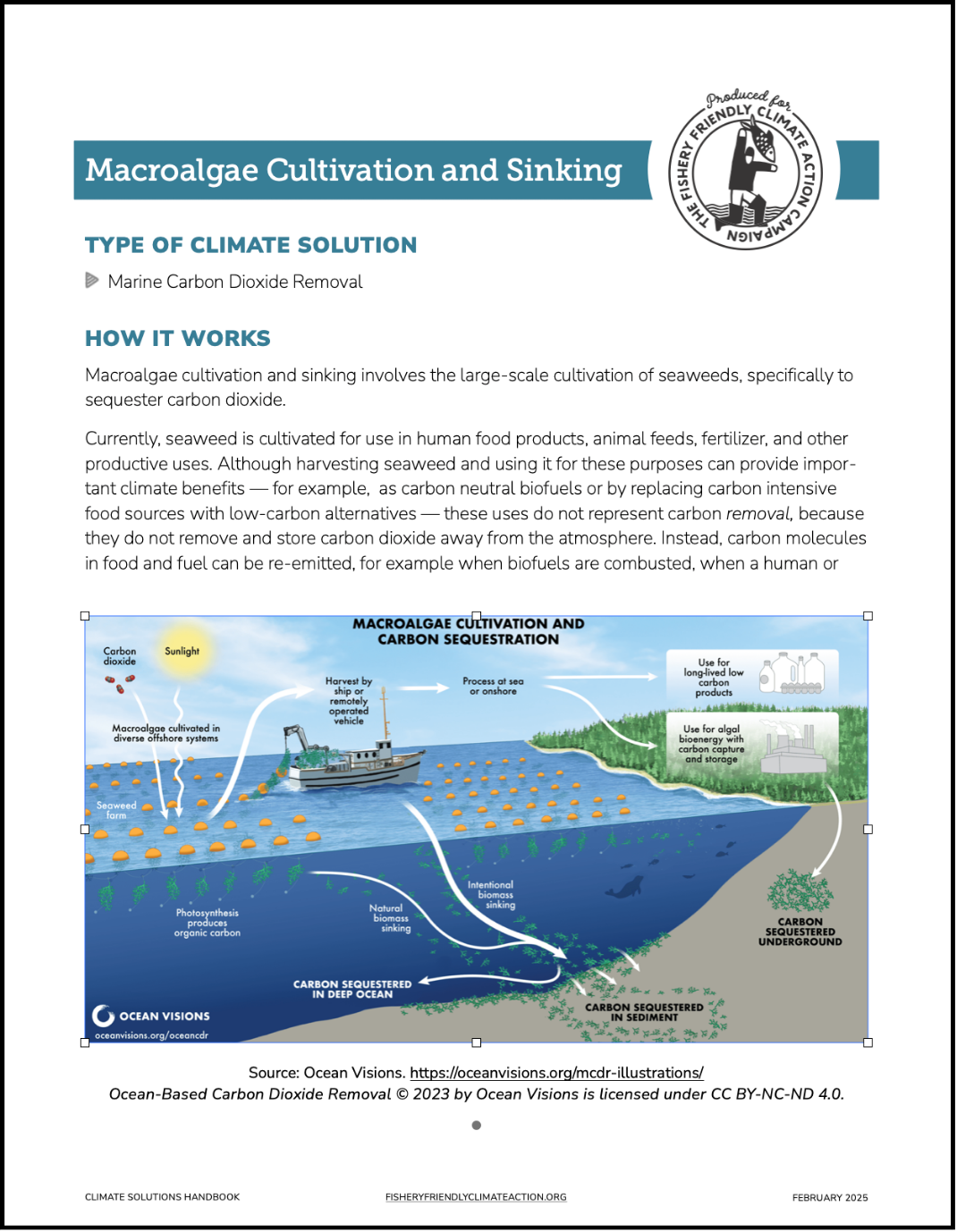
Macroalgal cultivation and sinking: Seaweed farms absorb carbon dioxide while photosynthesizing; seaweed is then deliberately sunk to the deep ocean where the carbon may be stored long-term.
Ocean fertilization: Macronutrients like nitrogen or trace nutrients like iron are added to a patch of ocean to stimulate a phytoplankton bloom; carbon removal may then occur if this plankton falls to the bottom and remains there long-term.
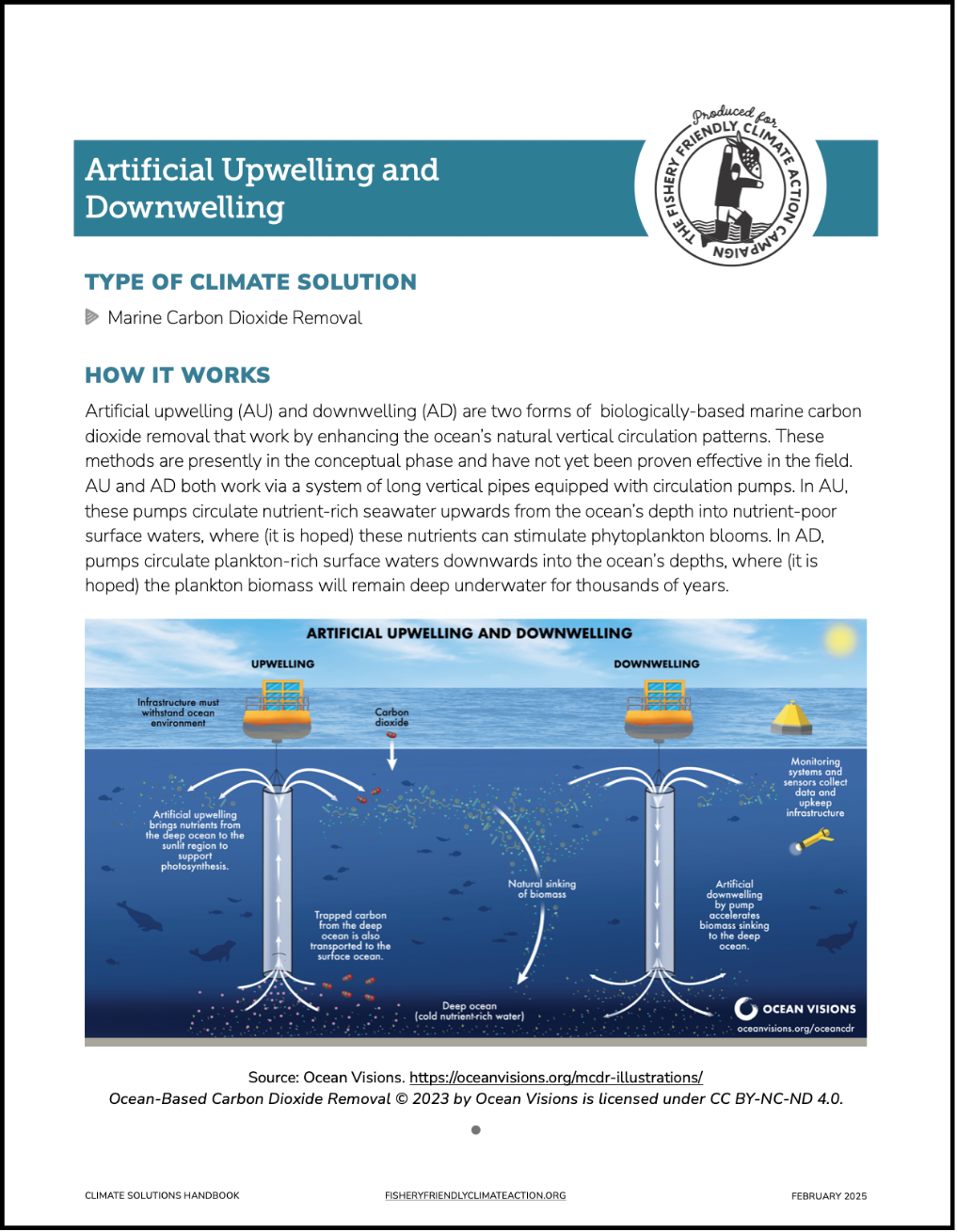
Artificial upwelling: Nutrient-rich water is pumped from the depth to the surface, where it may stimulate a phytoplankton bloom.
Artificial downwelling: Plankton-rich water is pumped to the bottom where it may be stored long-term.
CHEMISTRY-BASED APPROACHES
Ocean alkalinity enhancement: Alkaline molecules added to seawater react with carbon dioxide molecules already in the water, making it possible for the ocean to absorb additional carbon dioxide from the atmosphere. Potential methods include the addition of minerals (e.g., lime, olivine) and alkaline chemicals, either through ship-based dispersal or enhanced coastal weathering.
Direct ocean capture: Carbon dioxide is “stripped” from ocean water using electrochemical methods and the addition of an acidic solution. Carbon-depleted water is then added back into the ocean while the acidic stream is stored or used in industrial processes.
GAINING TRACTION
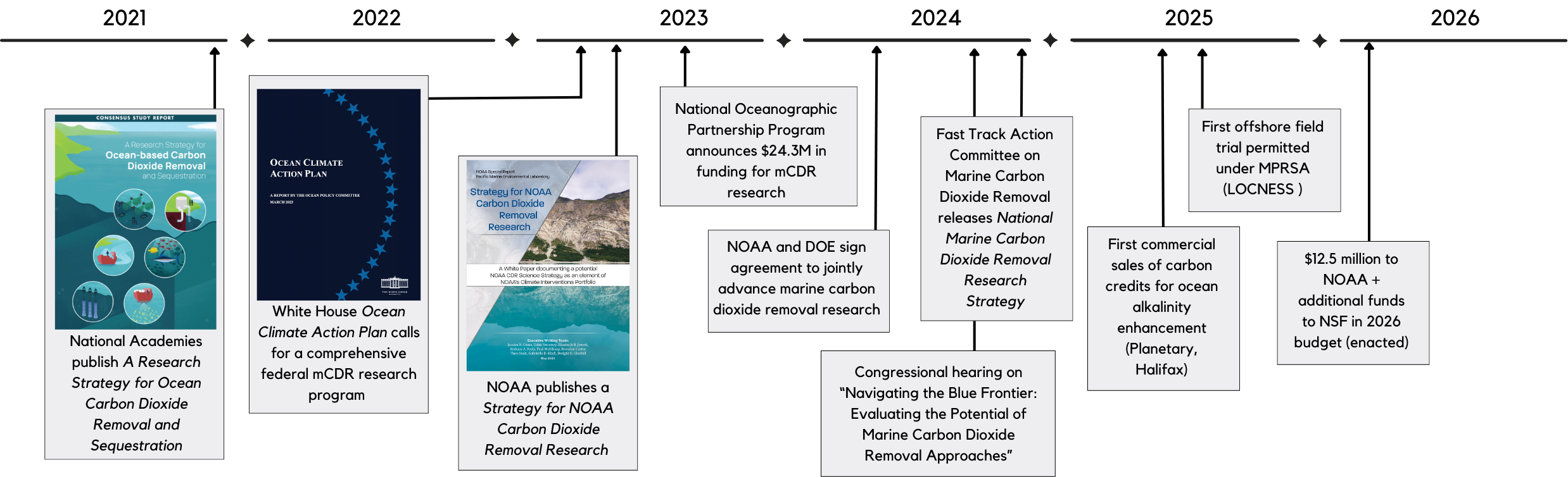
mCDR is attracting the interest of the world’s climate problem-solvers, and start-up companies are eager to build an mCDR economy. However, many questions remain about mCDR’s efficacy, measurability, and social and environmental impacts. A series of federal, philanthropic, and international initiatives in recent years has emerged to answer these questions and ensure the public interest is met. But the carbon market isn’t waiting for answers: as of May 2026, over 900,000 tons of carbon removal have been bought and sold as carbon credits. Now is the time for fishermen to get involved.
Video: Intro to mCDR for commercial fishermen
mCDR Pathways: Fact Sheets
These fact sheets, created for the Fishery Friendly Climate Action Campaign, are designed for a fishery audience. They highlight possible co-impacts (positive and negative) to fishery ecosystems and activities. Click here to view a visual key diagraming the differences among mCDR techniques.



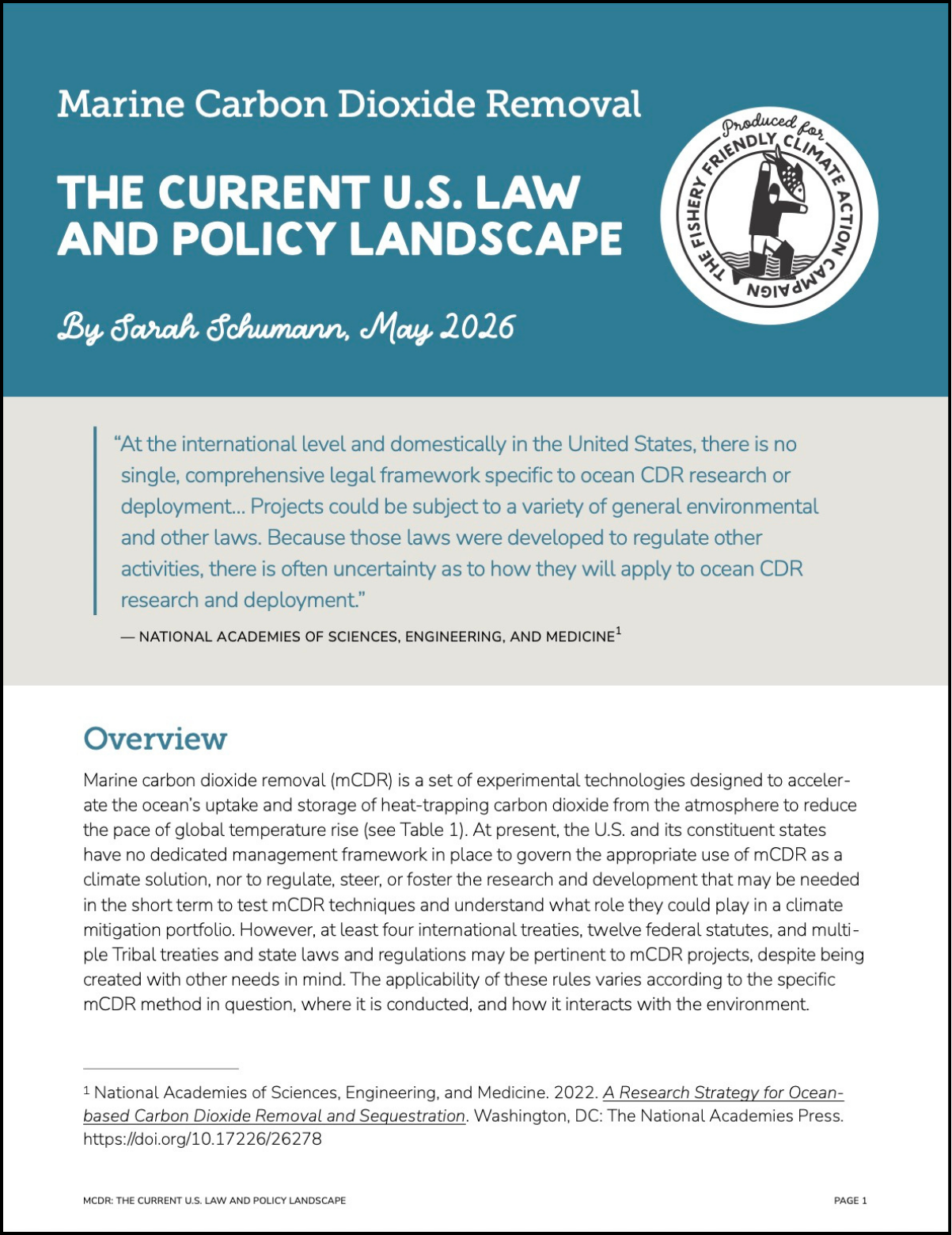
mCDR Policy and Governance
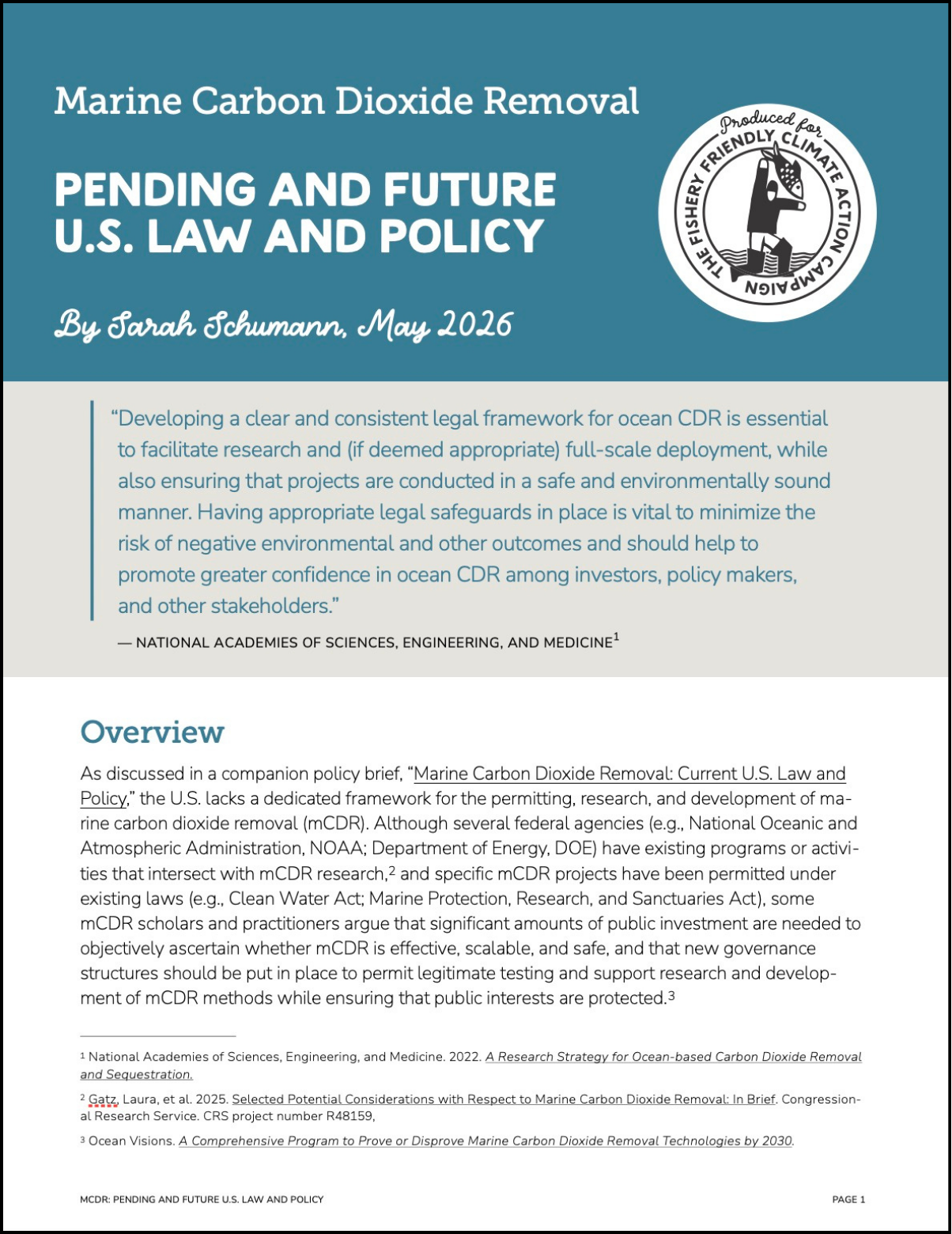
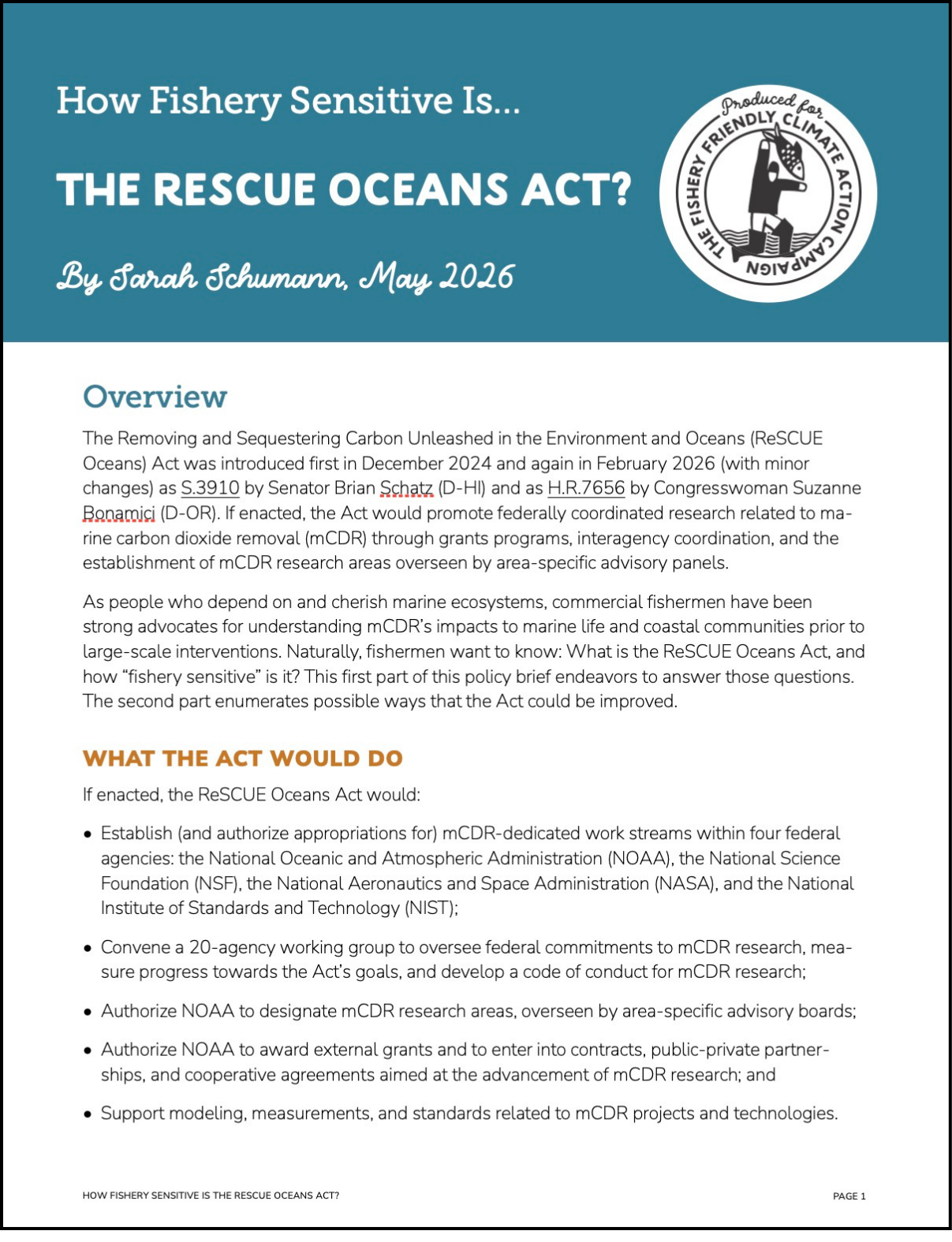
Information and Resources from Around the Web
Watch >>
Conversations on Ocean Carbon: A U.S. West Coast and Alaska Perspective
This recorded webinar series is co-organized by the California Ocean Science Trust, California Current Acidification Network, and Alaska Ocean Acidification Network to deliver the best available information on marine carbon dioxide removal (mCDR) and to explore concepts related to coastal ocean carbon. The series creates a direct dialogue among industry members, tribes, natural resource managers and scientists within the California Current and Alaska Ecosystems. Through these co-designed webinars, participants gain a better understanding of mCDR technologies, limitations, risks, and learn how to become engaged.
ClimateWorks Ocean CDR Animated Explainer Videos
These short explainer videos use animation to graphically explain various mCDR methods.
NOAA's Marine Carbon Dioxide Removal Engagement
Gabby Kitch from NOAA’s Ocean Acidification Program provides an overview of mCDR methods, NOAA's role in the space, and connections to larger U.S. government initiatives.
Read >>
Excerpt: As of today, mCDR remains unproven as a scalable solution to mitigate climate change. The priority must remain the urgent and drastic reduction of greenhouse gas emissions. Relying on the promise of mCDR as a “technical fix” could create a moral hazard, undermining decarbonisation efforts and increasing long-term risks by drawing political attention and financial resources away from proven, ready-to-implement solutions. Climate action should not come at the expense of nature and people. It is vital to safeguard ecosystem integrity and the continued provision of ecosystem services, including climate regulation. Nevertheless, scientific research may be warranted to assess the potential and risks of mCDR, provided that robust safeguards are in place to ensure it is conducted safely and equitably. In this context, the governance framework of mCDR, currently fragmented and inadequate, should also be strengthened and harmonised across existing international agreements to enable safe research while preventing any premature deployment.
Recommendations for Responsible Assessment of Engineered Marine Carbon Dioxide Removal Approaches
A three-page statement released in May 2026 by leading environmental and oceans organizations calling for: independent monitoring and verification; open-access data for transparency and scrutiny; stage-gated testing with progression only after safety is demonstrated; meaningful consultation with Indigenous peoples, coastal communities, and fisheries; and strong ethical governance and alignment with international best practice. The recommendations also caution against the early commercialization of mCDR through carbon credit markets.
A Research Strategy for Ocean Carbon Dioxide Removal and Sequestration
This report, published in 2022 by the National Academies of Sciences, Engineering, and Medicine, assesses what is currently known about the benefits, risks, and potential for responsible scale-up of six specific ocean-based CDR strategies. It describes the research needed to advance understanding of those approaches and address knowledge gaps. The resulting research agenda is meant to provide an improved and unbiased knowledge base for the public, stakeholders, and policymakers to make informed decisions on next steps.
Strategy for NOAA Carbon Dioxide Removal Research
This document was developed by the National Oceanic and Atmospheric Administration (NOAA) Carbon Dioxide Removal Task Team (CDR Task Team), a cross-NOAA interdisciplinary team with relevant expertise in climate and carbon, coastal and open ocean science, aquaculture development, and ocean conservation. This report was published in May 2023.
A Code of Conduct for Marine Carbon Dioxide Removal Research
This Code of Conduct exclusively applies to mCDR research. Its purpose is to ensure that the impacts of mCDR research activities themselves are adequately understood and accounted for as they progress. It provides a roadmap of processes, procedures, and activities that project leads should follow to ensure that decisions regarding whether, when, where, and how to conduct mCDR research are informed by relevant ethical, scientific, economic, environmental, and regulatory considerations.
The Ocean Carbon Dioxide Removal Decision-Making Landscape
This overview of “who’s who” in the mCDR ecosystem focuses on four questions: Who is involved? Who should be? What do they want to know? What do they worry about?
Precautionary Principles for Ocean Carbon Dioxide Removal Research
This four-page statement makes the case that “principled ocean CDR research will help safeguard ocean systems” and “precautionary, inclusive, and well planned ocean CDR research must be conducted to ensure these technologies can benefit the climate without harming the environment and people.”
This report by the World Resources Institute distills the potential scale of mCDR, expected costs, risks, co-benefits, and areas of research needed for seven mCDR approaches. It proposes an overall approach centered on informed and responsible development and deployment of mCDR that balances the urgency of emissions reductions against the environmental and social risks of mCDR, including halting development where risks outweigh expected benefits.
A Comprehensive Program to Prove or Disprove Marine Carbon Dioxide Removal Technologies by 2030
This eight-page living document by Ocean Visions outlines a research agenda to answer fundamental questions about both the additionality and durability of carbon sequestered using mCDR approaches, and their environmental and social impacts.
Columbia University Sabin Center Publications on mCDR Law and Policy
Columba University legal scholar Romany Webb and colleagues have published a wealth of analyses on international, federal, and sub-national legal and policy dimensions of mCDR research and implementation.
Surf >>
Ocean Visions is a science-based, nonprofit conservation organization that works with and across diverse sectors and disciplines to identify, co-design, evaluate, and support the implementation of bold, ocean-based solutions to counter and reverse climate impacts to the ocean. Resources include a global map of mCDR field trials, a set of interactive roadmaps focused on specific mCDR methods, and an mCDR ecosystem database that highlights the range and flow of mCDR activities and the interconnected roles of participants in researching, governing, and developing mCDR solutions.
[C]Worthy’s mCDR Ecosystem Map
The mCDR Ecosystem Map by the nonprofit [C]Worth illustrates both the flow of the emerging mCDR industry as well many stakeholders involved in researching, governing, developing, and deploying mCDR solutions. This source has since been updated and re-homed as Ocean Visions’ mCDR ecosystem database.