
Report to the fleet: Conversations with policy makers about tackling the fuel cost crisis
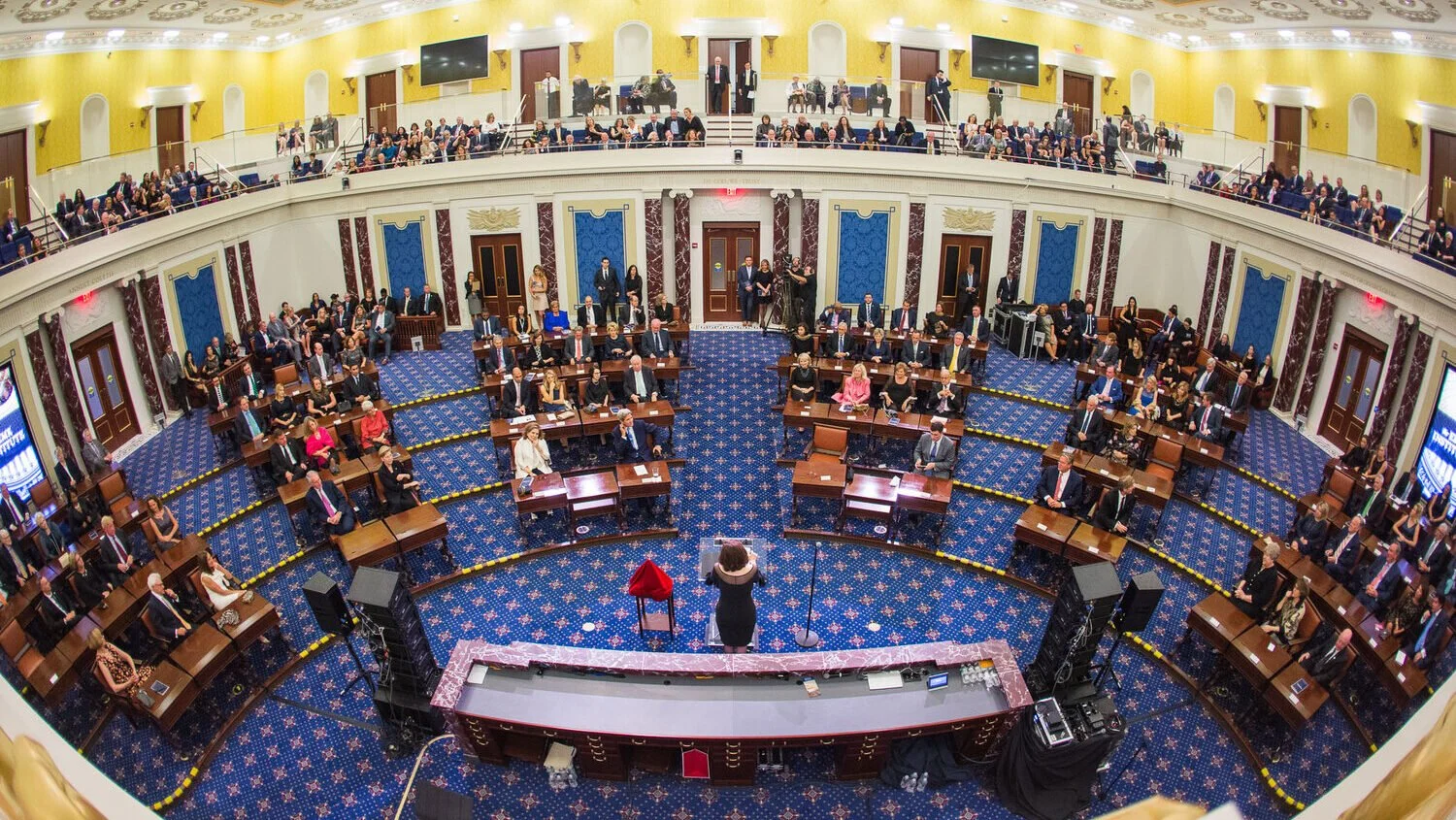
The U.S. Senate. Credit: Eric Haynes
By Sarah Schumann
June 24, 2026—The fishing fleet is struggling under the latest cycle of high fuel prices, with many businesses seeing major cuts to their profitability for the season. One possible remedy is to invest in making fishing vessels more energy efficient or less dependent on petroleum-based fuels. A second is to provide financial relief to fishing businesses during times of high fuel prices. These two priorities could be satisfied separately or in combination with each other through targeted policy changes.
In recent weeks, I have joined fishermen (including the New England Fishing Fleet Energy Resilience Fellows) and fishermen-led organizations across New England, Washington, and California to meet with the offices of Senators Cantwell (WA), Schiff (CA), Markey (MA), and Whitehouse (RI), as well as the new USDA Seafood Office. The purpose of those conversations was to explore current and near-term opportunities for fishermen and their representatives to shape policy outcomes related to fuel cost relief, investments in vessel efficiency and energy innovation, or both. This blog is a report to the fleet about what we’ve learned.
What we asked and what we learned
These calls were not (yet) about advocating for specific policy options. Rather, we wanted to understand the lay of the land: what policy issues have traction right now, which policy makers hold the keys to unlocking those opportunities for the fishing industry, and how can the fishing community elevate its priorities within this context? This information can help the fishing community organize around key opportunities without wasting time on dead-ends. With many of us entering our busy summer fishing seasons right now, we also wanted to understand timelines: how soon will any existing policy windows open or close, and when might they come back around again in the future if we miss the chance to engage right now?
Congress’ committee structure
For some of the fishing industry members participating in these calls (or for me, at least!), this was a crash course in Congress’ committee structure. The four Senate offices that we engaged with occupy seats, respectively, on: the Agriculture, Nutrition, and Forestry Committee (Schiff); the Environment and Public Works Committee (Whitehouse, Markey, Schiff); and the Commerce, Science, and Transportation Committee (Cantwell, Markey).
Every Senate and House committee has a chair and a ranking member. The chair is the lead committee position in the majority party (that would be Republicans in this Congress) and the ranking member is the lead position for the minority party (Democrats, in this Congress). The chair and ranking member have committee staff assigned to them; these staff members work for the committee as a whole and are experts in the issues of their assigned committee, often drafting the legislation that the committee considers and introduces to the floor. These roles contrast with individual Senators’ personal staff, who are found in all Senate offices and engage with constituents around various issues, possibly including some committee work. For fishermen seeking to advance policy agendas, it seems that engaging directly with committee staff may be an impactful step, as these staff tend to be especially well acquainted with the finer points of their respective legislation. However, it’s hard to get an audience with committee staff if there isn’t a committee chair or ranking member from your state. Working through multi-state fishing industry coalitions and networks (like the Fishery Friendly Climate Action Campaign!) can be useful in this regard, but only if the chair and/or ranking member of the committee you seek to engage are from coastal states; otherwise, it may be necessary to cultivate relationships beyond the fishing industry, such as with our partners in agriculture.
Partisanship in Congress
One of the major obstacles inhibiting fishing industry advocacy on these issues is the hyper-polarized nature of Congress. While the fishing industry does have solid relationships with Republican senators, the four offices that we happened to meet with are Democrats, and they told us that their status in the minority party prevents them from being able to elevate our priorities to the Republicans who hold the more powerful committee seats. This highlights the value for fishermen of leveraging our industry networks and locating receptive policy makers by working across state lines.
The Fishery Friendly Climate Action Campaign is nonpartisan and its participants (it’s a network, not a coalition) have a variety of political affiliations and views. Energy efficiency is inherently beneficial from an affordability perspective, which is good for business (even if it also benefits the climate). This should be a bipartisan issue, and the Trump administration has signaled its intent to support the commercial fishing industry. Nonetheless, finding the right champion to carry the message to the right committee can be a challenge in today’s divided context.
Statutory versus regulatory levers for change
To advocate effectively on this issue, it’s important to identify the precise levers that need to be pulled in order to create new supportive programs or make existing programs more accessible to fishermen. For instance, does the agency implementing a particular program have discretion to expand fishermen’s access on its own, or does this expansion require a legislative change that can only be done by Congress? If the agency has discretion, does it need to go through formal rule-making (which requires notice and comment in the Federal Register, possibly aligned with the development of a new program implementing regulation) or can it make the change directly through the ways it interprets or implements a program? We learned from our conversation that the answer may not always be obvious. This is where working with legal experts can help. It’s also helpful to understand the time cycles along which these processes occur—something we’re still working to understand. A useful resource for fishermen seeking to track regulatory rule-making is the Federal Register’s auto-alert service.
Everyone is talking about fuel prices
Finally, we learned—and this is no surprise—that we aren’t the only ones bringing our concerns about high fuel prices to policy makers. Petroleum costs are an economy-wide issue that affects every business and household across America. Advocating for a standalone fuel relief package for the fishing industry may be impossible for this reason, for why would the government throw a lifeline to one industry and not to others? This is why piggybacking the fishing industry onto any future relief programs designed for farmers and/or other food producers makes more sense. Alternatively, I’ve hatched the idea elsewhere in this blog of developing a technical assistance program coupled with participation stipends as a form of relief for fishermen, modeled after the Trade Adjustment Assistance Program for Farmers of the late 2010s (which was open to fishermen, and well leveraged by the New England lobster fishery and the Southern shrimp fishery). We don’t yet know which of these paths (if any) have traction, but we’re undertaking outreach to the agriculture community and we’ll keep the fishing industry posted on what we learn in the coming months.
Pinpointing the opportunities
The goal of achieving a more efficient fishing fleet that is supported through cost relief when fuel prices become insurmountable and has access to programs to help it innovate towards new energy technologies in the future could be supported through a combination of multiple legislative pushes and agency outreach approaches. As one of our most fishery-informed Senate contacts said during one of our calls, sometimes it’s better to take a “gillnet approach” than a “baited hook” approach. In other words: throw out a net and intercept whatever opportunities you can, rather than narrowly targeting a specific ask. It’s great when policy makers meet you where you’re at by using fishing gear analogies! Below are some possible opportunities that the fishing industry can track and engage with in the present and near future.
USDA Seafood Office
The USDA Office of Seafood was created in April to help fishermen navigate USDA programs and to coordinate “across USDA agencies to ensure fishermen are integrated into USDA programs” and “to revitalize the American seafood industry.” The Office told us that they are interested in working through nonfederal partners to provide outreach to the fishing community, and that they are putting together a regulatory reform agenda that will benefit seafood producers.
Key energy efficiency priorities that fishermen could pursue through this office include an expansion of fishermen’s access to the Rural Energy for America Program (REAP), which offers grants and loans for the adoption of energy efficient equipment by rural small businesses and agricultural producers. Under current eligibility rules, fishermen only have access to REAP if they are based in rural areas (defined as having fewer than 50,000 people) and if the improvement they seek to make is not related to the vessel’s propulsion system. Expanding access to REAP for all fishermen (rural or urban) and all efficiency improvements (propulsion- and non-propulsion-related) could be a game-changer for fishing industry energy efficiency.
It may be relevant to note here that the solicitation and awarding of grants and loans under the REAP program are currently on pause altogether and the USDA is “promulgating regulatory changes to the REAP program”. The USDA allegedly submitted a final rule on these change to the White House on June 15, but its contents are not yet publicly available, and we do not know the extent to which the aspects we are interested in may be affected.
The Office of Seafood will also be an indispensable partner in exploring options for fuel cost relief through integration of fishermen into any future input cost relief programs for farmers.
Farm Bill reauthorization
The Farm Bill is reauthorized by Congress every five to seven years, and it is due for reauthorization right now. The Farm Bill is overseen by the Agriculture, Nutrition, and Forestry Committee in the Senate and the Committee on Agriculture in the House. The House passed its own version of a reauthorized Farm Bill in April and the Senate Agriculture Committee introduced a Senate discussion version on June 23. The Farm Bill is important to the issue of fuel efficiency/relief for two reasons: it is the statute that authorizes the REAP program, and it can be a vehicle for the introduction of farmer/fisher relief programs (farmer relief programs are often administered through the USDA Farm Service Agency and funded through the Commodity Credit Corporation, as noted in this earlier blog).
The Senate version of the Farm Bill includes new provisions related to disaster relief. A proposed Specialty Crop Emergency Assistance Framework would establish a permanent disaster assistance program tailored to producers of specialty crops (fruits and vegetables, tree nuts, dried fruits, and horticulture and nursery crop) based on prior year sales, replacing the USDA’s current ad hoc approach to disaster relief. Relief from an economic crisis or market disruption is included as an eligible cause under this section. The bill would also authorize USDA to administer natural disaster relief funding via block grants to states to provide quicker and more regionally suited assistance. Seafood is not a specialty crop, but one avenue of potential interest for the fishing industry might be to advocate for seafood’s inclusion in this Farm Bill provision, since the fishery disaster relief programs administered by NOAA under the Magnuson Stevens Act are not authorized to provide aid for hardships caused by market crises or economic disruption.
Fishery priorities under this Farm Bill go beyond fuel efficiency and relief; for instance, the Senate version of the Farm Bill also: codifies the new Office of Seafood at USDA (the current office was created by executive order); includes new provisions related to the competitiveness of U.S. shrimp and seafood in global and domestic markets; directs USDA to carry out a study to evaluate methods to expand processing of U.S.-caught seafood in coastal communities; and makes fishing and fish processing businesses eligible for federal farm operating loans. The final item in this list was imported from Senator Murkowski (Alaska) and Senator King’s (Maine) American Seafood Competitiveness Act and Working Waterfronts Act—an example of how small bills without big constituencies behind them can successfully gain traction by being rolled into a “packaged” bill (a term I learned in our calls with Senate staff) such as the Farm Bill or an omnibus appropriations bill.
This may be the most fishery-focused Farm Bill yet, and the Farm Bill is becoming an increasingly important piece of legislation for fishermen to engage with and understand. (I’ve downloaded several books about it to my Kindle and I plan to read them while the net’s soaking during my Bristol Bay season this summer!). It is not clear whether the Farm Bill will proceed to reauthorization in this Congress or not. Although both chambers have made strides towards reauthorization, the proximity of the August recess and the distraction of the mid-term elections could lead to further delays, and a potential change of majority party after the midterms could lead to a reshuffling of priorities in 2027. However, a delay could give the fishing industry more time to pitch the inclusion of revised REAP eligibility criteria into a future version of this bill as it works its way towards reauthorization.
DERA reauthorization
The Diesel Emissions Reduction Act (DERA), which has national, Tribal, and state sub-programs, is overseen by the Environment and Public Works Committee and implemented by the EPA. Tweaks to the DERA program could make these sub-programs more uniformly accessible to fishermen, who are currently sidelined from participation if they fish in areas with good air quality (which are currently deprioritized under the national and some state sub-programs), if they live in a state which does not make fishing vessels eligible for DERA funds, or if they live in a state which defines fishing vessel eligibility around technologies that are not yet commercially available (such as electric vessels). Further, some fishermen have suggested the inclusion of a DERA funding carve-out for food producers. All of these changes could be made through the DERA reauthorization process.
DERA was due for reauthorization at the end of Fiscal Year 2024. Reauthorization bills were introduced by Representative Matsui in March 2025 and by Senator Whitehouse in July 2025, but both efforts stalled last year and do not appear to be Senate priorities at present. But I’ll let you know if my Federal Register auto-alert pings me with news about DERA!
SHIPS for America Act
The Commerce, Science, and Transportation Committee introduced the Shipbuilding and Harbor Infrastructure for Prosperity and Security for America (SHIPS for America) Act in April 2025. It is a large piece of proposed legislation that is by and large focused on strengthening America's national security and economic resilience by revitalizing the shipbuilding industry. However, our conversation with Senator Cantwell’s staff identified this bill as a potential place to plug in some fishery priorities related to efficiency.
One possible area of interest within the bill is its Title 5, Subtitle C on Shipbuilding Innovation and Infrastructure. This section would establish a national maritime innovation incubator program within the Department of Transportation’s Maritime Administration (MARAD) to advance and accelerate R&D for technologies and manufacturing processes which will support the maritime industrial base. The program expands the existing United States Center for Maritime Innovation Program by establishing incubators in different regions of the country that would include multi-stakeholder partnerships and specialize in shipbuilding, alternative fuels, shoreside infrastructure, vessel design and naval architecture, among other areas. This section would also authorize the activities of the National Shipbuilding Research Program and require increased coordination between NSRP and the MARAD.
Another possible are of interest is its Title 6, Subtitle B on Workforce Pipeline, which would institute a number of provisions related to training and incentivizing the next generation of shipbuilders and merchant marines. This is potentially relevant to the topic of fishing vessel energy efficiency and alternative fuels because previous research highlighted workforce development as a key ingredient in future policy packages focused on fleet efficiency and energy innovation, due to the need for trained naval architects, shipbuilders, and marine technicians to build efficient vessels and install and maintain efficiency-boosting and alternative fuels technologies on existing boats.
Working Waterfronts Act
The Working Waterfronts Act, introduced by Senators Murkowski (Alaska) and King (Maine) in February 2024 and again in June 2025, stalled while waiting for review by the Finance Committee. This bill’s lack of progress might mean it hardly merits a mention in this blog, were it not for the fact that it is the only bill listed here that actually includes a section on “Transition to alternative fuel commercial fishing vessels” (along with a goodie bag of other stuff for the fishing industry, such as grants and cooperative agreements to support rural seafood processing and cold storage and reform of the Saltonstall-Kennedy program). The proposed alternative fuel program would establish a pilot program at NOAA to “facilitate the transition of United States-flagged commercial fishing vessels to alternative fuel commercial fishing vessels,” where “‘alternative fuel commercial fishing vessel; means a commercial fishing vessel that runs on an energy source other than an energy source that is exclusively derived from petroleum, including a hybrid energy source.” The bill would allocate $10 million for loans to support the construction of new alternative fuel vessels and retrofits of existing vessels to run on alternative fuels, and would allocate $10 million for loans to support research and development of alternative fuel technologies for commercial fishing vessels and necessary shoreside infrastructure.
If the Working Waterfronts Act moves forward in committee or is reintroduced in a future Congress, it would be straightforward for fishermen to ask its sponsors to include additional provisions related to improvements to the REAP and DERA programs for commercial fishermen, to include high input costs as a factor in determining fishery disaster declarations under the Magnuson-Stevens Act, and/or include fisheries in specialty crop disaster relief under the Farm Bill.
Annual appropriations
If all else fails, annual appropriations bills can also be a place for the fishing industry to place some of its hopes regarding energy efficiency, innovation, and relief. I’ll have to do some research into how that process works, what timelines it adheres to, and what types of requests can be included. Stay tuned for a future blog!
Conclusion
Some people hire expensive lobbyists and consultants to navigate Congress and federal agencies for them. Here at the Fishery Friendly Climate Action Campaign, we do it as a hobby in between fishing trips! Although our approach may seem amateur, that’s the point: elected and government officials should be as accessible to hard-working fishermen as they are to the biggest names on K Street. I want to thank the USDA Seafood Office and the four Senate offices that we met with for demonstrating this principle in action.
I also want to thank my fellow fishermen who have joined me in this adventure for not succumbing to the cynicism about government that plagues so many members of our industry, and for dedicating their time (during a busy part of the annual fishing cycle) to educate and learn from policy makers on these timely issues. I look forward to continuing this work with my peers across the fishing industry when I return to shore from my Bristol Bay salmon season.
