
Workshops in RI and MA highlight urgency of fuel efficiency and relief programs
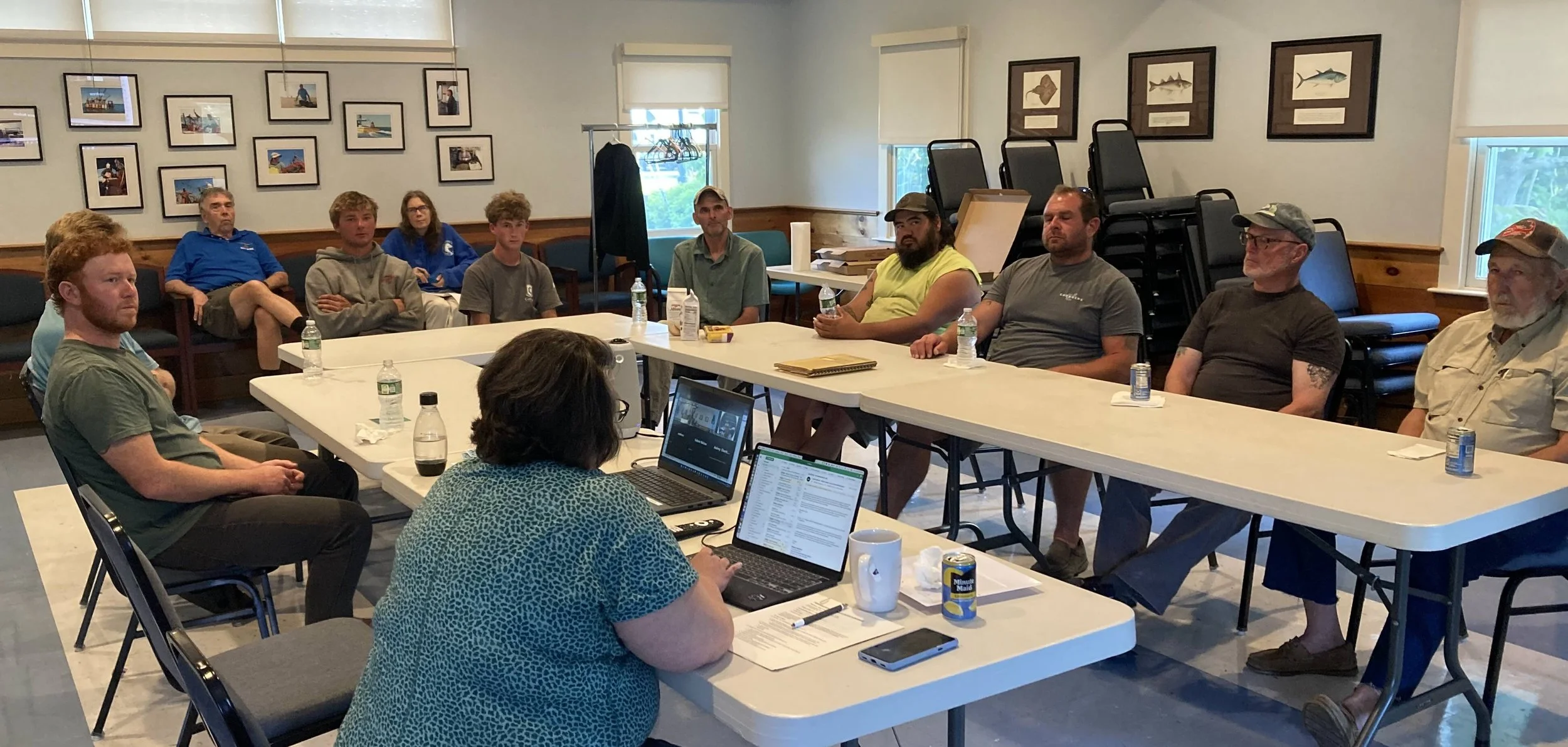
Fishermen met at a hybrid workshop hosted at the Cape Cod Commercial Fishermen’s Alliance in Chatham, Massachusetts on June 4 to discuss this season’s high fuel prices and what the industry and its partners in government can do to secure short-term relief while investing in a more energy-efficient future.
By Tim Rovinelli and Dean Karoblis
Tim Rovinelli and Dean Karoblis are Fishing Fleet Energy Resilience Fellows with the Fishery Friendly Climate Action Campaign
Wakefield, Rhode Island – by Tim Rovinelli
On June 2, a small group of fishermen and stakeholders had a meeting on short notice at the East Farm Commercial Fisheries Center to discuss the issue everyone is talking about this year: fuel prices. For the second time in five years, geopolitical conflict has spiked oil prices and directly impacted profitability. To catch fish, you have to leave the dock and now leaving the dock is significantly more expensive than it was a few months ago.
This situation is eerily reminiscent of 2022, the year that a team of fishermen across the US first joined forces to explore technology and policy solutions to promote a more efficient, less petroleum-dependent fishing fleet. Just like today, fuel prices shot up (sometimes in tandem with dropping prices for fish) and many boats struggled to make the math work. There could be many ways to address this problem, but we focused on the question of how to reduce our fuel use overall. The less we use, the more we make even when energy costs drop. And using less fuel means releasing less emissions.
This year, at this meeting in the commercial fisheries research center, the nine participants included lobstermen, gill netters, engine specialists and quahoggers. Attendees were united in the concern that fuel prices at this level make it hard to sustain the business. Generally there was agreement that this industry needs to be supported in the way that farmers are in this country. Fishing is a crucial industry— fishermen feed the country just as farmers do.
On the question of strategy though, the discussion became more diverse. As an imminent approach we suggested that the Farm Bill reauthorization might present opportunities for immediate relief. Over the next few weeks, we hope to help fisheries stakeholders explore options about direct relief as well as opening up energy efficiency incentive programs including the Rural Energy for America Program (REAP) to fishing vessels and fleets. This would provide an opportunity for short- and long-term investments in fuel use reduction and cost mitigation for the current season. It might be possible to unlock significant savings simply by changing the eligibility requirements by a few words, and now would be an ideal time.
Generally, the feeling in the room was positivity about potential solutions but a bit of resignation that yet again this industry is suffering under energy costs that deplete the ability of vessels to make the investments necessary to reduce those costs in the first place. Despite this, I was motivated to see that we did have the will to keep organizing and see if change was possible this time.
Chatham, Massachusetts – by Dean Karoblis
On June 4, sixteen fishermen and fisheries association staff met at the offices of the Cape Cod Commercial Fishermen’s Alliance to discuss possible solutions for the high fuel prices that our industry is grappling with this season. We heard a presentation by Sarah Schumann about previous work done through the Fishery Friendly Climate Action Campaign to explore pathways for making fishing boats less dependent on petroleum-based diesel. Then we launched into a lively discussion about alternate fuels, efficiency innovations, and what kinds of solutions might (and might not) work for different fisheries.
Participants exchanged dark humor about this being “just the latest” economic crisis facing the industry, and half-jokingly warned the youngest fishermen in the room to buckle up for a career of highs and lows. It was clear from this banter that this industry have been here before—but also that we’re eager to break the cycle.
A few days ago, news broke of a ceasefire with Iran, and already the price of fuel is coming down. But even if it stays down (which remains to be seen), this shouldn’t stop us from trying to find a long-term solution. Fishing—and fuel—are volatile markets, and we shouldn’t waste any time in being ready for the next time this happens. There are bright ideas and potential solutions out there, and we should be talking more about them.
In some ways, nothing concrete got done at the June 4 meeting, but I felt good about it anyway. In a conversation with Sarah afterwards, she said that dialogue is getting something done, because building relationships and trust is the first step in organizing a community for collective action. I think this comment hits the nail on the head, and explains why the time that those sixteen people spent on a summer evening discussing fuel solutions instead of preparing for the next day’s fishing trip was worthwhile for everyone there.
The best takeaway for me from this experience from this was how fast we can mobilize a small, in-person roundtable meeting. When there’s a problem, people want to get together and work on the solution. We saw real evidence of this on June 4.
I want to thank the Cape Cod Commercial Fishermen’s Alliance for hosting our event at their facility, helping get the word out to their members, and having five of their staff people present to participate in the evening workshop.
“This was a great opportunity to talk to fishermen from across the region about various government assistance programs and potential boat modifications that could address rising fuel prices,” said Ray Rowell, who directs the Alliance’s permit bank. “It was also helpful to learn about the history of how fishermen dealt with previous cycles of economic distress when fuel prices spiked.”
