
Can fishing communities make mCDR “fishery sensitive” by influencing its funding channels?
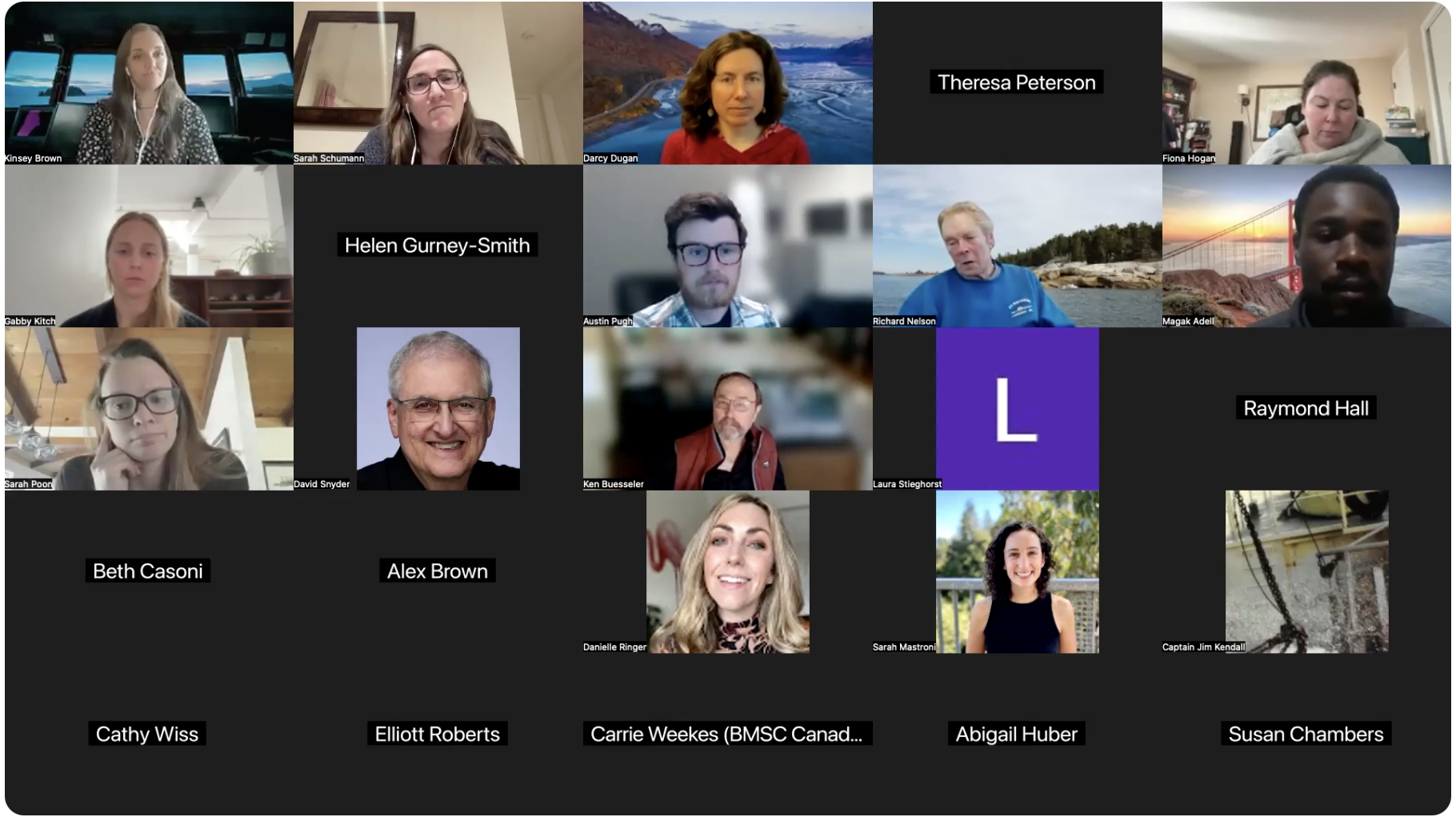
On March 24, 2026, members of the fishing and the mCDR communities gathered online for a webinar on Defining "Fishery Sensitive" Marine Carbon Dioxide Removal. In this blog, we do a deeper dive into one of the questions posed during the webinar’s discussion.
By Sarah Schumann
Funding and investment decisions play a major role in shaping any innovation, and mCDR is no exception. But it’s not always clear to communities that stand to be affected by an innovation who is behind those funding decisions or what criteria they’re using to make them. Seafood industry representative Katie Almeida underscored this point at our March 24 webinar on Defining "Fishery Sensitive" Marine Carbon Dioxide Removal when she commented:
What makes me nervous is that the funders of these projects are going to drive what interests they want to see in mCDR, which might not be lined up with what the fishing industry or even the environmental community might see as urgent or better for the ecosystem and the environment… Is there any say that this community has as to which way the money can be spent and which projects can be focused on?
Katie’s question piqued my interest. If fishing communities are interested in pushing the field of mCDR in a “fishery sensitive” direction, then forming relationships with funders might be an effective and efficient way to do so.
It’s easy to imagine how this strategy could play out in the context of government spending: to steer the field, fishermen could contact their elected officials and advocate for mCDR research programs that are designed to maximize ecosystem co-benefits, minimize environmental harms, and ensure rigorous community input from start to finish. In fact, they have an opportunity to do just that right now, while Congress considers the recently reintroduced Removing and Sequestering Carbon Unleashed in the Environment and Oceans Act (ReSCUE Oceans Act).
But the past year’s drop in government climate spending has positioned philanthropic funding—not government spending—as the major driver of mCDR research. The philanthropic sector for mCDR includes foundations (such as the Grantham Foundation and ClimateWorks Foundation), funding consortiums (such as the Ocean Resilience Climate Alliance), and regranters (such as Carbon to Sea, Ocean Visions, and Carbon 180) which are nonprofit intermediaries staffed by mCDR subject experts who distribute targeted grants from pools of funding provided by larger foundations with more diverse funding portfolios. In contrast to our elected officials in Congress, entities in the philanthropic sector are less familiar and accessible to members of the fishing community. More to the point, there is nothing obligating those entities to answer our phone calls. This is why Katie’s question is so significant.
I reached out to a few regranters to better understand the scope for communities to shape mCDR funding priorities in the philanthropic sector.
Irene Polnyi of the Carbon to Sea Initiative replied to my inquiry by saying, “As a small team, Carbon to Sea works with partners that are more ‘plugged in’ to communities that we seek to hear from.” She mentioned the Fishery Friendly Climate Action Campaign is an example of one such community, adding (to my pleasure) that Carbon to Sea is reviewing the Campaign’s mCDR roundtable synthesis report and the “fishery sensitive” mCDR guidance memos recently published by the Responsible Offshore Development Alliance and other partners. “We then take results from reports like those that you all contributed to,” Irene explained, “and ensure they have a place within our R&D roadmap.”
Additionally, Irene said that for “larger grants for more significant, multi-year research programs,” Carbon to Sea requires grantees to “have an engagement component to ensure the community is feeding into the project's design and our future work. We also fund community engagement efforts in areas where we are exploring field research to provide the community a way to influence the type of research they'd like to see conducted in the area.” In fact, the fishing community is already shaping regranters’ priorities in ways this community may not even realize: Irene informed me that the fisheries engagement in a field trial project conducted last year helped inform a Carbon to Sea Request for Proposals (RFP) into impacts of ocean alkalinity enhancement on higher trophic levels.
Eric Sutton from Carbon 180, another regranter, took a different tack, emphasizing the need for funders to support community capacity to shape mCDR—a priority I have long advocated for here in this blog and elsewhere. “At Carbon180 we commit to multi-year, unrestricted regranting initiatives to fund communities’ capacities for carbon removal research, analysis, existing CDR project evaluation, education and community-led carbon removal projects,” Eric said. “What this means is that we do not dictate what communities do, instead we support what communities are interested in doing. Through our trust-based, solidarity model, we support environmental and climate advocates, communities, and stewards to shape the CDR projects, policies, and processes they see showing up near their homes.”
These responses show that mCDR regranters are contemplating both how to support community input into mCDR with their dollars and how to integrate community input into decisions about what else they fund. While that’s undeniably a good thing, its at-will and variable nature underscores the limitations of private funding compared to government funding, which—under ideal circumstances unfettered by partisan prejudice and gridlock—would allow for communities to navigate fully transparent channels for input via elected officials accountable to their voters.
In the absence of strong federal funding for mCDR and other climate and science work, it seems that not only is the research and development community clamoring for the philanthropic sector to step in with more money to fund its projects, but communities who stand to be affected by these projects are also expecting the philanthropic sector to emulate government in its levels of access and transparency. Unfortunately, the dollar amount of funding available to the philanthropic sector pales by comparison with the federal government; therefore, so too does its own capacity for engagement with communities.
Therefore, communities need to be targeted and strategic in how we approach this sector. In the coming months, the Fishery Friendly Climate Action Campaign plans to involve fishing community members in compiling a guide for mCDR funders, letting them know how they can best use their limited dollars to support fisheries engagement in mCDR. If you have suggestions on this matter, please contact me at fisheryfriendlyclimateaction@gmail.com
