
Blog
Spotlighting fishermen-led climate action from coast to coast
Podcast and Analysis: Lessons from LOC-NESS for the Future of Fishery Engagement in mCDR
Ashley McKinnon is a graduating senior at Brown University who completed her thesis research in collaboration with the Fishery Friendly Climate Action Campaign, focused on exploring lessons learned through fishing community engagement in the LOC-NESS ocean alkalinity enhancement field trial completed by the Woods Hole Oceanographic Institution in 2025. Listen to a podcast interview with Ashley and read her thesis!
Gulf of Maine sees first open-water ocean alkalinity enhancement field trial in US
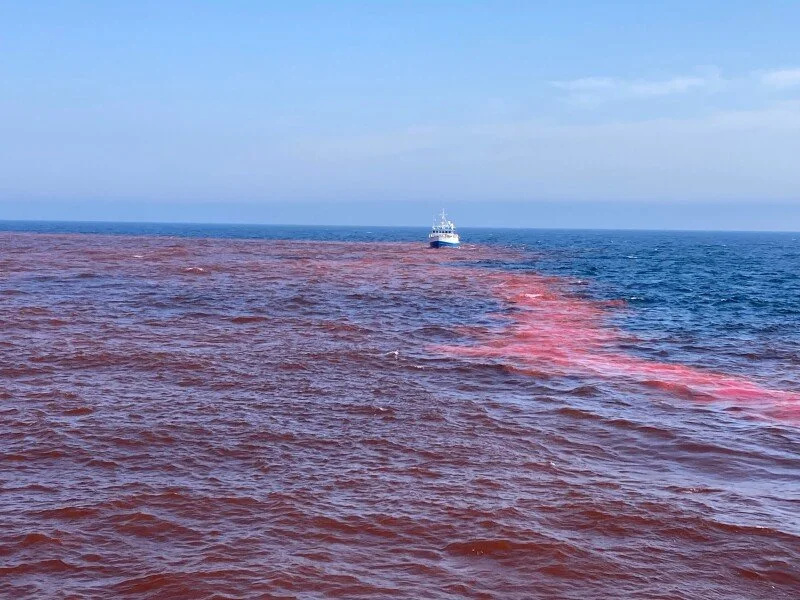
This is an excerpt from an article published in National Fisherman. The U.S.’s first ocean alkalinity enhancement (OAE) field trial in federal waters took place on Aug. 13, with the dispersal of 16,500 gallons of sodium hydroxide into the Gulf of Maine. Led by a team of Woods Hole Oceanographic Institute (WHOI) scientists, this milestone represents the culmination of three years of planning, which for the last year has included a steady stream of feedback (including some unvarnished pushback) from the fishing industry.

Post-field trial debrief with the LOC-NESS science team
Sarah Schumann caught up with two of the lead scientists of WHOI’s LOC-NESS ocean alkalinity enhancement field trial in the Gulf of Maine: Adam Subhas and Jennie Rheuban. She was curious to hear how the experiment went from their standpoint, what kind of data they had collected, and what preliminary results they were ready to share from the field trial.
A fisherman bears witness to WHOI’s alkalinity experiment in the Gulf of Maine
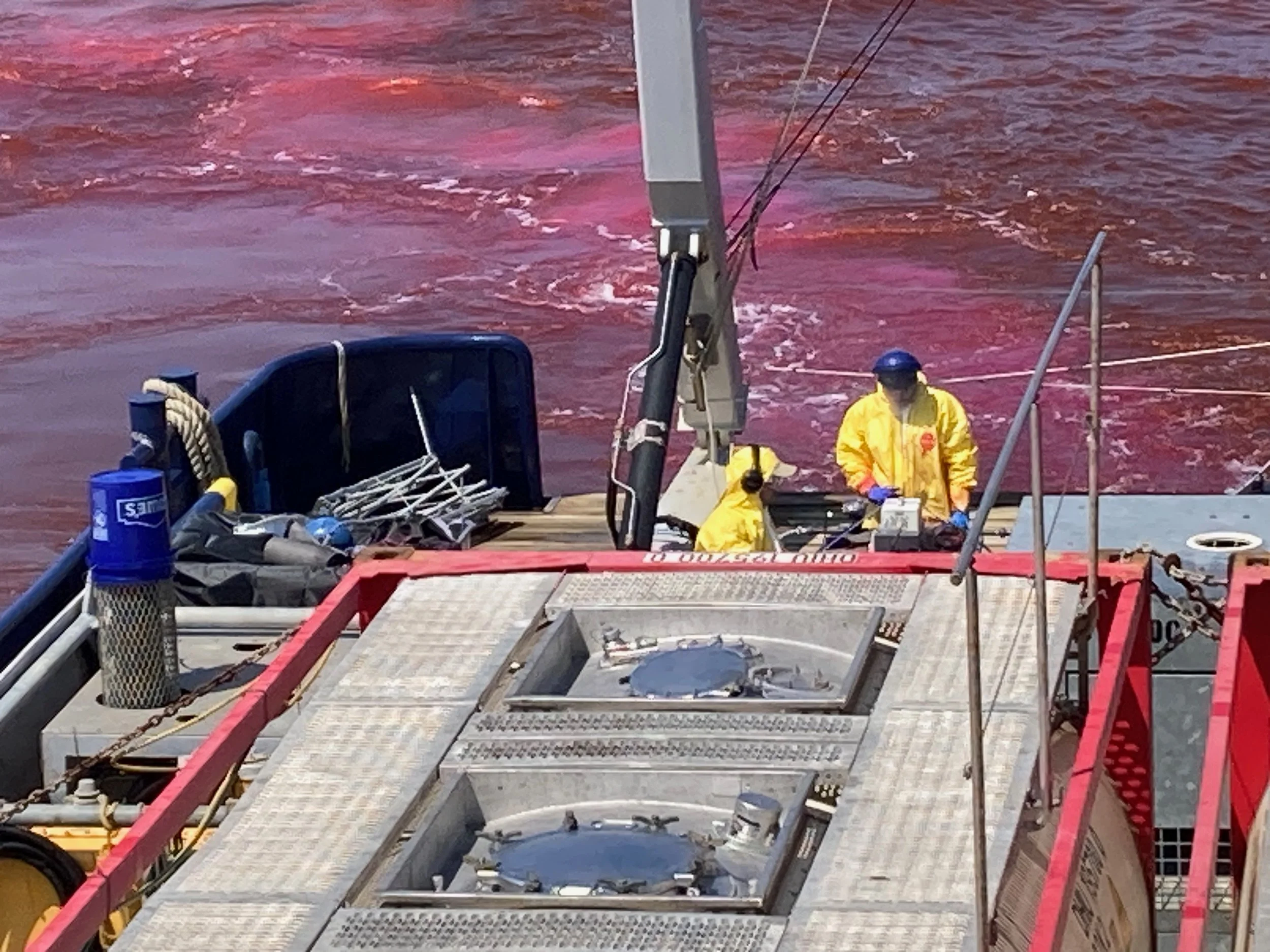
Sarah Schumann was a fishing industry observer on the August 2025 LOC-NESS ocean alkalinity enhancement field trial in the Gulf of Maine, in which WHOI engineers released 16,500 gallons of sodium hydroxide solution dyed with rhodamine tracer into surface waters to assess potential for carbon removal. Read her field notes here.
Maine Coast Dock Talk: Understanding WHOI's LOC-NESS Project (link to podcast)
This is a link to the Maine Coast Dock Talk podcast. In this episode of the Maine Coast Doc Talk podcast, produced by the Maine Coast Fishermen’s Association, host and executive director Ben Martens chats with Dr. Adam Subhas of the Woods Hole Oceanographic Institution to explore the research initiative known as the LOC-NESS project. LOC-NESS stands for Locking Ocean Carbon in the Northeast Shelf and Slope and is testing the safety and effectiveness of ocean alkalinity enhancement to combat climate change.

Fishermen voice concerns about ocean alkalinity experiments
This is an excerpt from an article published in National Fisherman. New England waters may soon be the location for a first-of-its-kind field trial to test a technique called ocean alkalinity enhancement (OAE) that could someday become a pivotal tool in the fight against climate change. But fishermen are concerned that the experiment could further disrupt an ecosystem and fishing industry already contending with the effects of offshore wind energy development and climate change.